ATS Offline

Essays, notes, and experiments from staying unplugged, then returning to the feed with questions.
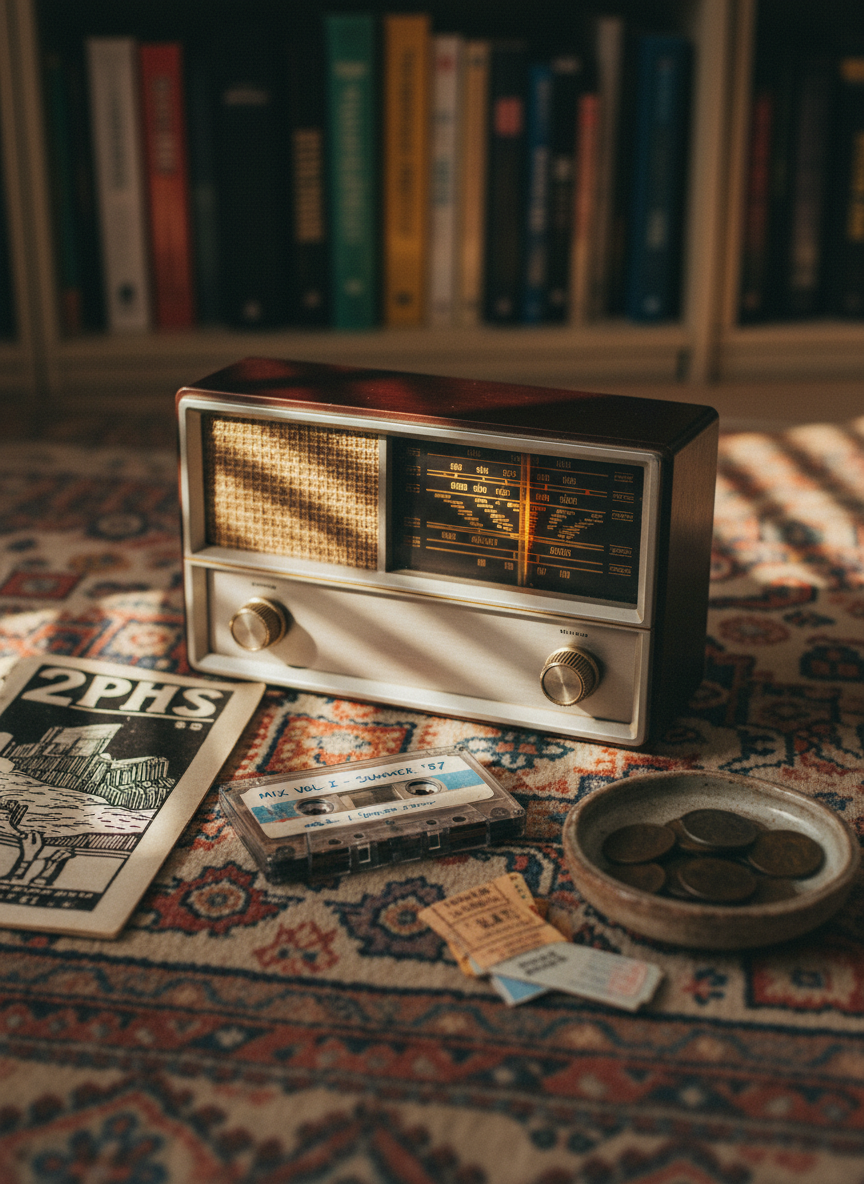
A vintage transistor radio with a brushed aluminum face, warm amber tuning dial, and tiny knurled knobs rests on a patterned, slightly faded rug. Around it lie scattered cultural artifacts: an open zine with bold black-and-white graphics, a cassette tape with handwritten labels, and a small ceramic dish holding subway tokens and ticket stubs. The radio’s textured speaker grille catches a slice of golden hour sunlight streaming through blinds, casting striped shadows across the rug and objects. Photographic realism, shot from a low angle at close range, uses shallow depth of field to blur the background bookshelves into soft color blocks. The mood is nostalgic and reflective, capturing the feeling of exploring culture and ideas through offline artifacts and quiet listening.
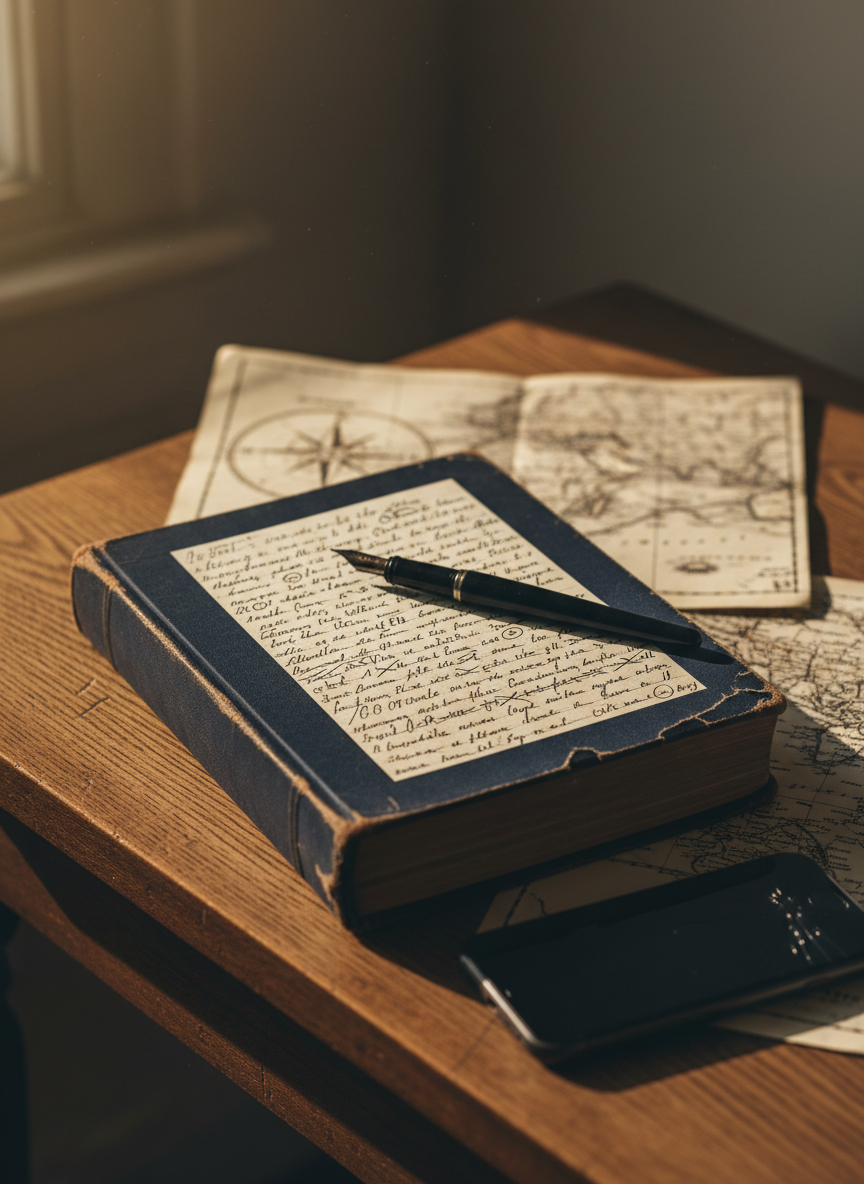
A well-worn hardcover journal with a deep navy cloth cover, its edges frayed and corners softened by years of use, lies half-open on a small oak desk. A black ink pen rests diagonally across a page filled with tight, handwritten notes and tiny arrows, some lines crossed out in thought. Around it, a few folded paper maps and a powered-off smartphone sit slightly out of focus. Late afternoon window light falls in a diagonal beam across the desk, creating gentle shadows and warm highlights on the journal’s textured fabric. Captured at eye level with a shallow depth of field, in photographic realism, the scene feels contemplative and quietly introspective, evoking the private culture of ideas formed while offline.

Why I Went Offline

ATS Offline began as a notebook during train rides without signal, evolving into a practice of tracing how culture moves when no one is doomscrolling, and what we notice once the metrics, alerts, and algorithmic noise finally quiet down.

Behind ATS
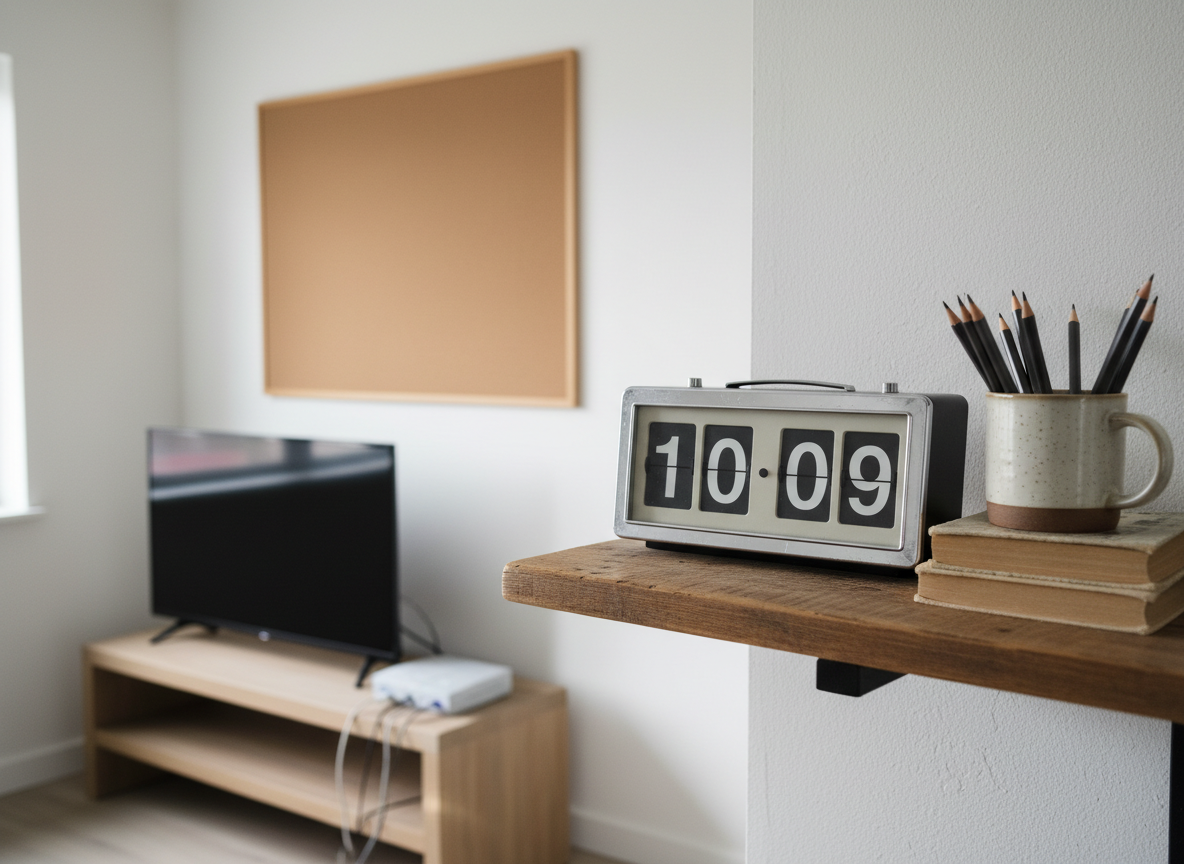
An old-fashioned analog flip clock with bold white numbers on matte black tiles sits at the edge of a simple wooden shelf, its metal frame slightly scuffed. Next to it, a small stack of mismatched paperback books leans casually against a chunky ceramic mug filled with sharpened pencils. The background reveals a minimalist living room corner with a dormant TV screen, unplugged game console, and a blank corkboard on the wall. Soft overcast daylight filters through an unseen window, casting diffused, shadowless light that softens every edge. Photographic realism, shot from a slightly elevated angle with balanced composition, creates a calm, almost timeless mood, suggesting a pause from digital noise and a return to slower, analog culture.

Aarav Sharma

CEO

Editor and cultural researcher translating offline conversations into essays, zines, and live reports.

A vintage transistor radio with a brushed aluminum face, warm amber tuning dial, and tiny knurled knobs rests on a patterned, slightly faded rug. Around it lie scattered cultural artifacts: an open zine with bold black-and-white graphics, a cassette tape with handwritten labels, and a small ceramic dish holding subway tokens and ticket stubs. The radio’s textured speaker grille catches a slice of golden hour sunlight streaming through blinds, casting striped shadows across the rug and objects. Photographic realism, shot from a low angle at close range, uses shallow depth of field to blur the background bookshelves into soft color blocks. The mood is nostalgic and reflective, capturing the feeling of exploring culture and ideas through offline artifacts and quiet listening.

Mateo García

CTO

Visual storyteller documenting subcultures through photography, marginalia, and experimental layouts for each issue.

A well-worn hardcover journal with a deep navy cloth cover, its edges frayed and corners softened by years of use, lies half-open on a small oak desk. A black ink pen rests diagonally across a page filled with tight, handwritten notes and tiny arrows, some lines crossed out in thought. Around it, a few folded paper maps and a powered-off smartphone sit slightly out of focus. Late afternoon window light falls in a diagonal beam across the desk, creating gentle shadows and warm highlights on the journal’s textured fabric. Captured at eye level with a shallow depth of field, in photographic realism, the scene feels contemplative and quietly introspective, evoking the private culture of ideas formed while offline.

Zuri Ndlovu

Engineer

Data-minded curator mapping patterns across cities, timelines, and how disconnection reshapes attention.

An old-fashioned analog flip clock with bold white numbers on matte black tiles sits at the edge of a simple wooden shelf, its metal frame slightly scuffed. Next to it, a small stack of mismatched paperback books leans casually against a chunky ceramic mug filled with sharpened pencils. The background reveals a minimalist living room corner with a dormant TV screen, unplugged game console, and a blank corkboard on the wall. Soft overcast daylight filters through an unseen window, casting diffused, shadowless light that softens every edge. Photographic realism, shot from a slightly elevated angle with balanced composition, creates a calm, almost timeless mood, suggesting a pause from digital noise and a return to slower, analog culture.

Leila Haddad

Designer

Community coordinator hosting offline salons, workshops, and field trips that test ideas in public.